How to Wash Newborn Clothes: A Practical Guide for Parents
If you have a newborn at home, you have probably noticed how quickly the laundry pile grows. Spit-up, milk, diaper leaks and the occasional blowout mean clean outfits seem to disappear as fast as you fold them.
This guide covers the practical side of newborn laundry: what to do before the first wash, how to treat common stains, how to set up a routine that fits real life, and how to tell when a piece has reached the end of its useful life. None of it needs special products. It is mostly about small habits that make the whole job easier.
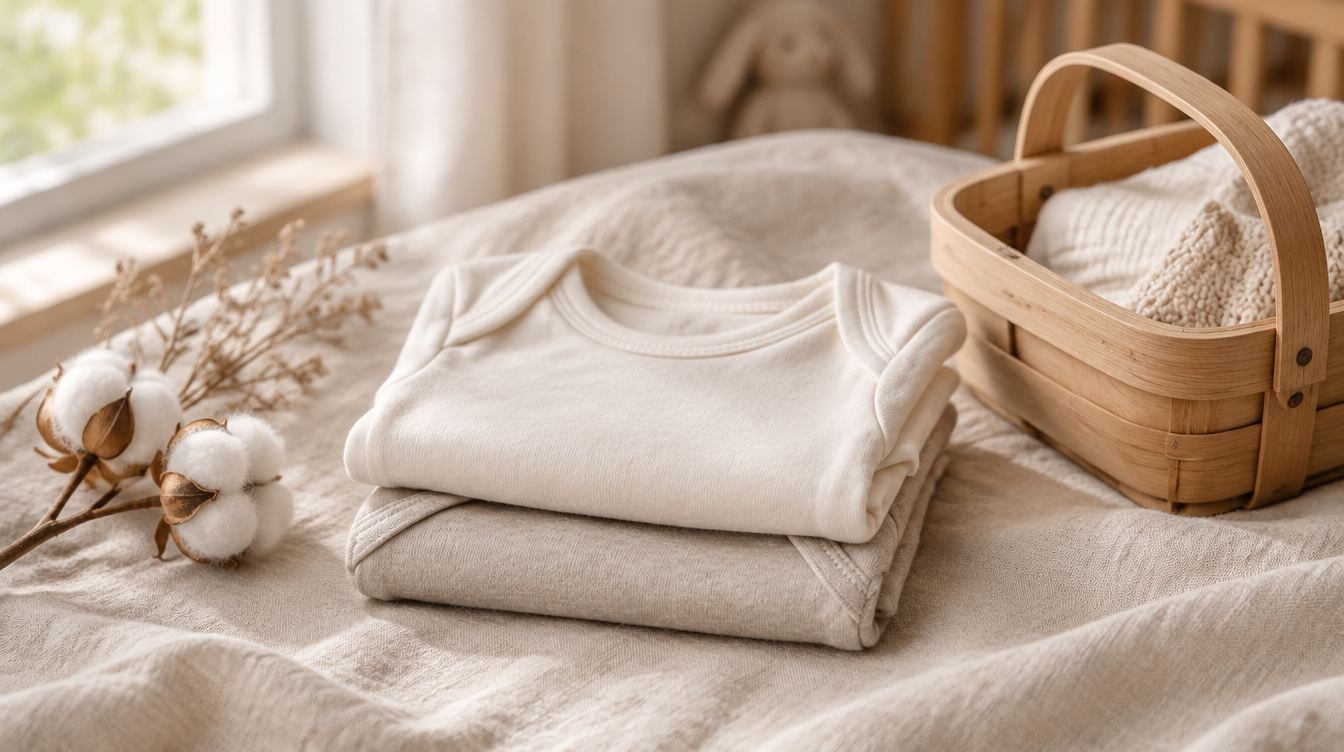
Before the first wash
Clothes pick up a lot on their way to your home. They are handled, folded, packed and moved from place to place before a baby ever wears them. A quick check before the first wash saves time later.
Cut off any tags that could rub against the skin. Many parents snip the tag rather than pulling it, so no sharp edge is left behind.
Check for loose threads, buttons or ribbons. Tie off or trim anything that could come loose.
Turn garments inside out before washing. This protects prints, reduces pilling on the outside and helps the inside get properly rinsed.
Wash new pieces separately from the rest of the household laundry for the first wash, so any loose lint or residue stays contained.
The first wash also tells you a lot. Notice how the fabric feels when it is damp and again once it is dry. If something feels stiff, scratchy or uncomfortable, it is worth knowing before the piece goes on your baby.
How many outfits to keep on hand
Newborns often need several outfit changes a day, so it helps to plan rather than react. There is no single right number, because it depends on how often you do laundry, whether you have a dryer and how many people share the household load.
A practical approach is to keep enough clean clothes for at least one full day, plus a few spares for night feeds, spit-up and unexpected changes. Once your routine settles, you will know your own number.
Keep the everyday pieces easy to reach, such as the sleepsuits and bodysuits you use most. Store the rarely used sizes and occasion outfits separately so they do not take up space in your daily rotation.
Building a washing routine that fits real life
The best routine is the one you will actually keep up. Start by deciding how often you will wash. Many families find that washing baby clothes every day or two keeps things manageable, while bigger household loads happen separately.
Sort the baby clothes first. Group pieces by how dirty they are. Lightly soiled items can go together, while heavy spit-up or diaper leaks should be treated before they go in the machine.
Wash small loads rather than packing the machine. Crowded drums do not rinse as well, and residue is what makes clothes feel stiff or itchy.
Use a gentle or delicate cycle when your machine offers one, and a cool or lukewarm temperature for everyday washing.
Keep baby clothes away from towels and heavy fabrics that shed lint. Lint can cling to soft cotton and make it look worn sooner.
Clean your machine's drum and filter from time to time, so residue does not build up and transfer onto clothes.
A simple guide to common stains
Stains are a normal part of newborn life. The good news is that most of them respond well to a few quick steps, especially when you act early. Work through the list below based on what you are dealing with.
Milk and spit-up: Rinse the area in cool water as soon as you can. Rub gently with a little mild soap, rinse again, then wash as usual. Avoid hot water at this stage, since heat can set protein-based marks.
Poop: Scrape off any solids into the toilet first. Rinse the stain in cool water, pre-treat with a little mild soap, then wash. Repeat if a faint mark remains before drying.
Baby food, such as orange vegetables or fruit purees: Rinse in cool water right away. Dry stains are harder to lift, so soak the piece briefly in cool water before washing.
Older or dried stains: Soak the piece in cool water for a while, then wash. Patience usually works better than stronger products, and it protects the fabric over time.
A word of caution: avoid bleach and heavily scented stain sprays on baby clothes. They can be harsh on sensitive skin and on the fibers themselves, and most newborn stains do not need them.
Choosing a detergent and getting the amount right
You do not need an elaborate setup. A mild, fragrance-free detergent used in the amount the label suggests is enough for most families. Using more does not clean better, and it often leaves extra residue behind in the fabric.
If your clothes still feel heavy or stiff after washing, try a second rinse rather than more detergent. Many parents find that a little extra rinse makes a noticeable difference.
Measure detergent rather than pouring freely, and check the dosage for small loads.
Skip fabric softener, which can leave a coating on fibers that reduces breathability.
Avoid scented dryer sheets and heavily perfumed products near baby clothes.
If you are unsure what to use, a mild, fragrance-free option is an easy starting point.
Drying and ironing
Air drying in the shade is gentle on cotton and keeps its softness. Direct sun can fade colors over time, so the shade is usually better for brighter pieces. If you use a dryer, choose a low or gentle setting and remove pieces while they are still slightly damp.
High heat can shrink cotton and weaken elastic, so it is worth avoiding where you can. For knits, lay them flat to dry instead of hanging them, since hanging can stretch shoulders and necklines out of shape.
Ironing is optional. If you do iron, use a low heat setting and check the care label first. Ironing gives a crisp finish, but a well-dried piece is comfortable whether or not it is pressed.
Reading the care label
Care labels are easy to skip, but they tell you exactly what the fabric can handle. The symbols follow a standard system, so once you know the basics, they are quick to read.
A washtub with dots or a number shows the maximum water temperature. The fewer dots, the cooler the wash.
A triangle means bleach is not recommended. A triangle with an X means no bleach at all.
A square with a circle shows the dryer symbol. Dots inside the circle show the heat level, and an X means do not tumble dry.
An iron with dots shows the heat setting, and an iron with an X means do not iron the piece.
If a label feels confusing, following the lowest recommended setting is a safe way to start. Gentle care usually helps clothes keep their softness and shape for longer.
Storing clean clothes
Once clothes are dry, fold them and store them somewhere dry and well ventilated. Avoid leaving freshly washed pieces in a damp basket for long, since a musty smell usually means the clothes did not dry fully, not that they need stronger detergent.
Group clothes by size and by type, such as sleepwear, everyday outfits and layers for cooler days. This makes it much faster to grab what you need at 3 a.m., and it helps you see at a glance when a larger size is needed.
When clothes need to be retired
Newborn clothes are often worn for a short time, but some pieces will wear out sooner than others. Retire anything with stretched or loose elastic, pilling that does not come off, thin spots, or a neckline that has lost its shape.
Clothes that are no longer comfortable for your baby can often be repurposed. Soft, worn pieces make good cleaning cloths or padding for a craft project, so they still get a second use.
Hand-washing small pieces
Some items, such as delicate knits or a favorite small piece, may do better when hand-washed. Fill a basin with cool water, add a small amount of mild detergent, and gently move the item through the water. Rinse until the water runs clear, press out the excess water without wringing, and dry flat away from direct sun.
When to check with your pediatrician
Laundry habits matter, but they are only one part of a baby's skin health. If you notice redness, irritation, bumps or a rash that does not settle after a few days, speak with your pediatrician or another qualified healthcare provider.
When you are troubleshooting, try not to change several things at once. Changing one thing at a time makes it easier to see what helps, and a pediatrician can help you work out what is really going on.
Questions parents often ask
Do I need to wash every piece before every wear?
Not necessarily. The first wash matters most for getting to know a fabric. After that, follow a routine that fits your household.
Can I use my usual detergent?
Many parents do. If your usual product is mild and fragrance-free, it may suit your routine. If you are unsure, choosing a simple, fragrance-free option is an easy place to start.
Should I wash clothes if they look clean?
Clothes that have been worn, even briefly, can pick up sweat, milk and everyday dust. Washing after each wear is the simplest way to keep things fresh, but a clean-looking piece that has not touched anything messy can often wait for the next wash.
What if a piece still smells after washing?
Check that it dried fully, since damp clothes can smell musty. If the smell remains, try an extra rinse, and make sure the drum and filter of your machine are clean.
How can I save time on laundry?
Keep a simple rhythm, wash small loads often, store clothes by size so they are easy to find, and keep enough everyday pieces that you are never caught without a clean outfit.
A final thought
Newborn life is full of small decisions, and laundry does not need to be one of the big ones. Keep the routine simple, watch how your baby's skin responds, and ask for help when something does not feel right. Most of the time, a few good habits are all it takes.
If you are shopping for newborn pieces, you can see our Newborn Going-Home Outfit or our Daily Necessity Long Bodysuit. Both are made from 100% GOTS certified organic cotton.
With warmth,
Shiray
UI Baby Founder


Comments