
Dressing Your Newborn for the Car Seat: Layers, Harness Fit and Staying Comfortable
The first car ride home is often the first time your newborn spends a long stretch in a car seat, and many parents are surprised by how much clothing matters there. A puffy snowsuit or a thick layer can look cozy, but it can also change how the harness fits. Dressing for the car seat is less about adding warmth and more about getting the fit right.
In Malaysia, cars are often air-conditioned for much of the day, and a ride can start hot and then cool down quickly. Your goal is a baby who is comfortable and not sweating, and who is buckled in so the harness holds the body securely. Thinking in thin layers makes both goals easier to reach.
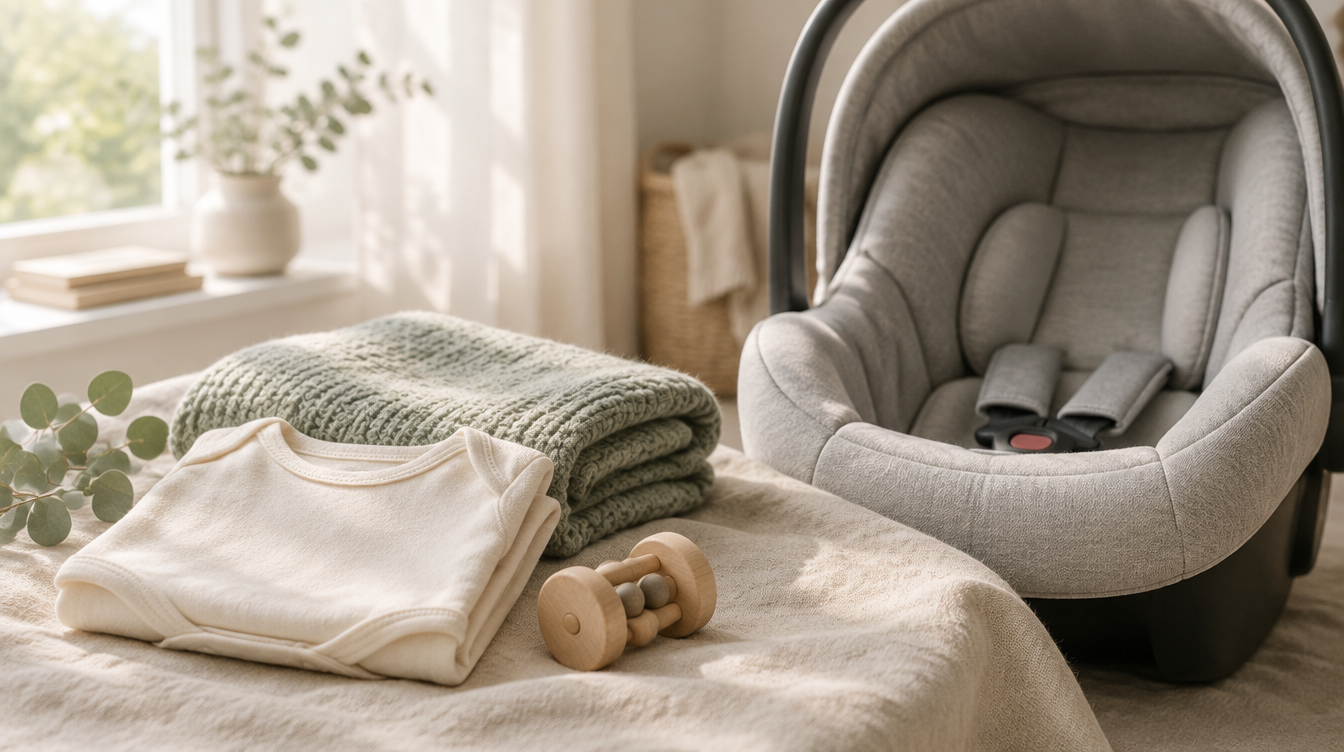
Start with one thin, breathable base layer
Choose a soft layer that sits close to the skin, such as a cotton bodysuit or a short-sleeved onesie. Breathable fabric lets heat escape in a warm, humid car, and it is gentle on delicate skin. Your baby's base layer should feel comfortable enough to wear on its own in a room.
Add a light outer layer that you can take off or put on easily. A few pieces work well for most rides:
A bodysuit or onesie as the base layer
A lightweight long-sleeved top or sleeper for cooler journeys
A thin cotton muslin or blanket that goes over the harness, not under it
Socks or booties, which are easy to remove if your baby warms up
Why bulky clothing under the harness is a problem
Many car seat guides advise against thick, padded clothing underneath the harness. Padded layers compress during a sudden stop or crash, which can leave the straps looser than they looked when you buckled up. A harness that feels snug over a puffy coat may feel loose once the padding flattens.
If your baby is dressed warmly for the walk from the house to the car, take the outer layer off before buckling. Once the harness is fitted, you can lay a blanket over the top of the straps for warmth. This small habit keeps the straps close to your baby's body, where they are meant to sit.
The pinch test: a simple check before every ride
Once your baby is buckled in, try the pinch test. Gently pinch the harness webbing at the shoulder. If you can pinch a fold of strap between your fingers, the harness is too loose and needs tightening.
Work through these checks each time you buckle up:
For a rear-facing seat, keep the harness straps at or just below your baby's shoulders, following your seat's manual.
Tighten the harness until it feels snug against the body, with no slack at the shoulders.
Do the pinch test at the shoulder strap, and repeat it if you are unsure.
Place the chest clip at armpit level so it holds the straps in position.
Check the harness again after a few minutes in the car, since straps can settle and loosen.
Your car seat manual is the final guide for your specific seat, so keep it in the car and read the harness section before the first ride. Many seats also have labels or indicators that show the correct strap position. If anything about the fit is unclear, ask for help before you drive.
Dressing for an air-conditioned car in Malaysia
Malaysian cars often run the air conditioning hard, and a newborn's body temperature can change quickly between a warm house, a hot parking area and a chilled cabin. Dress your baby as you would for a comfortable room, plus one light layer. If you would feel fine in a short-sleeved shirt, your baby may only need one extra thin layer.
Rather than checking hands and feet, which often feel cool even when a baby is comfortable, check the chest or the back of the neck. A warm, slightly damp neck or chest means it is time to remove a layer. If the chest feels cool, add a thin blanket over the harness and check again in a few minutes.
Park in shade where you can, and use a sun shade on the rear windows to keep direct sunlight off your baby's skin. Once everyone is settled, turn the air conditioning down a little rather than aiming it straight at the seat. These small steps make the ride more comfortable without adding bulk.
What to avoid in the car seat
Thick snowsuits, padded coats or heavy layers under the harness
Heavy blankets, pillows or toys placed behind your baby or under the straps
Padding or inserts that did not come with your seat, unless the seat's manual allows them
Keeping your baby in the car seat for long periods outside the car, since most babies rest better on a flat, firm surface
Leaving your baby alone in a parked car, even for a short moment
Practical habits for every ride
Good habits make car rides easier, especially in the early weeks when everything feels new. Keep a small bag in the car with a spare thin layer, a clean cloth and a light muslin. Pack a spare bodysuit too, since newborns can have messy moments on the way home.
Check the harness after each stop, since babies shift and a quick glance takes only a few seconds. When you arrive, lift your baby out of the seat onto a flat, firm surface so they can stretch and settle.
Keep a spare thin layer and muslin in the car bag
Dress your baby one layer lighter than you would dress yourself for the car
Check the harness after every stop
Remove the outer layer before buckling, then add a blanket over the straps
Shade the windows so direct sun does not reach your baby's skin
Planning for longer journeys
Longer drives, such as trips to visit family or a clinic visit that takes an hour in traffic, need a little more planning. Pack a diaper bag with clean clothes, wipes and a spare bodysuit so a change does not turn into an emergency. Think about when your baby is likely to need a feed, and where you can stop safely if that time comes.
On a long drive, plan a stop every couple of hours and bring a clean, thin blanket for the seat. Use each break to check the harness, adjust the layers and offer a feed if your baby is hungry. A calm, predictable routine helps babies settle and makes the trip easier for everyone.
Planning the going-home outfit
The going-home outfit is often the first outfit your baby wears outside the house. Choose something soft and simple in breathable fabric, and layer it over a bodysuit as the temperature requires. Keep the outfit close-fitting enough that it does not bunch up under the harness.
Fasten the fronts so there are no loose ties near your baby's neck or in the straps. A soft, easy outfit makes both buckling and unbuckling simpler for you, which is a real help on a day that already feels busy.
When to ask for help
If you are unsure whether the harness fits correctly, or your baby seems unusually cold, hot or unsettled in the car seat, speak with your pediatrician or another qualified healthcare provider. Many areas have trained car seat technicians who can check your installation and harness fit in person. Asking for help is a sensible step for any new parent.
If you notice redness, a rash or skin irritation where the straps or fabric touch your baby, ask a pediatrician to take a look. Persistent crying, unusual sleepiness, or any change that worries you should also be discussed with a healthcare professional promptly.
If you are preparing soft pieces for the car ride and the first weeks at home, you may like our Newborn Going-Home Outfit and our Daily Necessity Short Bodysuit. UI Baby makes chemical-free baby clothing with zero petroleum dye, zero bleach and zero optical brighteners, using 100% GOTS certified organic cotton, and we focus only on newborns and sensitive skin. Explore the going-home outfit at https://www.uibaby.shop/product-page/hospital-going-home-outfit and the bodysuit at https://www.uibaby.shop/product-page/daily-necessity-bodysuit.
With warmth,
Shiray
UI Baby Founder


Comments